Part IV Lander to Whitefish: Bison-filled Layover at the Yellowstone Forever Institute’s Buffalo Ranch in Lamar Valley
Part IV Lander to Whitefish: Bison-filled Layover at the Yellowstone Forever Institute’s Buffalo Ranch in Lamar Valley
The rain ended, thankfully, at some point in the middle of the night but a heavy damp fog dripped from the trees. I was not a happy camper… sections of my cool Nemo Tango Down Comforter were soggy from falling off the edge of my sleeping pad into the small pond of rainwater and condensation on the floor of my tent. My Anker 20000mah PowerCore Power Bank was out of juice, as well as my laptop and phone. It was not freezing, but just barely and that Big Agnes Fly Creek HV UL1 was feeling very confining. I needed to get out of my tent after almost twelve hours hiding from the rain, wearing as many pieces of my wool and water-resistant down to stay warm during the long night.
It was a short bike ride to the Canyon Lodge, where I found a wall outlet for charging, a warm fire to chase away the bone chill and some slightly-less than boring industrial US National Park concessionaire breakfast food, overpriced and under-spiced. But I chatted with tourists, posted some photos and arranged with my friend, Joe, arrival arrangements that afternoon at the Yellowstone Forever Institute’s Buffalo Ranch, nestled up in the remote Lamar Valley. All I had to do was to climb a little from 2400 to 2700 meters, drop down past Mt. Washburn and through the Devil’s Den, along the Yellowstone River to Tower Junction for lunch, and then turn east up along the Lamar River.
My panniers must have held an additional eight kilos of water-soaked clothes, ground cloth and tent for the climb. But the day cleared as I climbed and exercise put even more heat back in my body. This panorama shot below is, I think, of Mt. Washburn, heading north on Grand Loop Rd, around the Washburn Hot Springs Overlook.

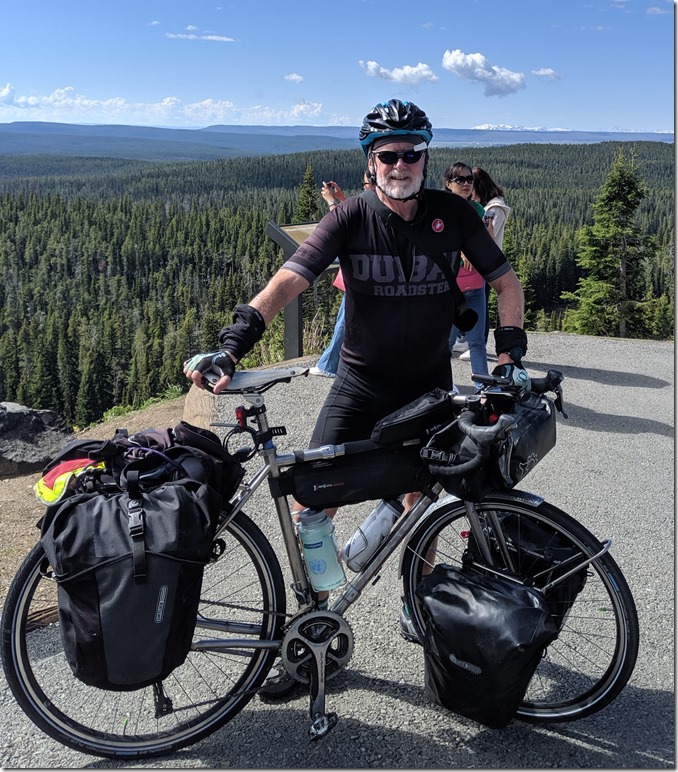
This is one of my favorite shots, taken by some tourists from Riverdale in the Bronx, who I had met at breakfast. Over my left shoulder you can see the Teton’s, where I had been just two day’s of riding ago.
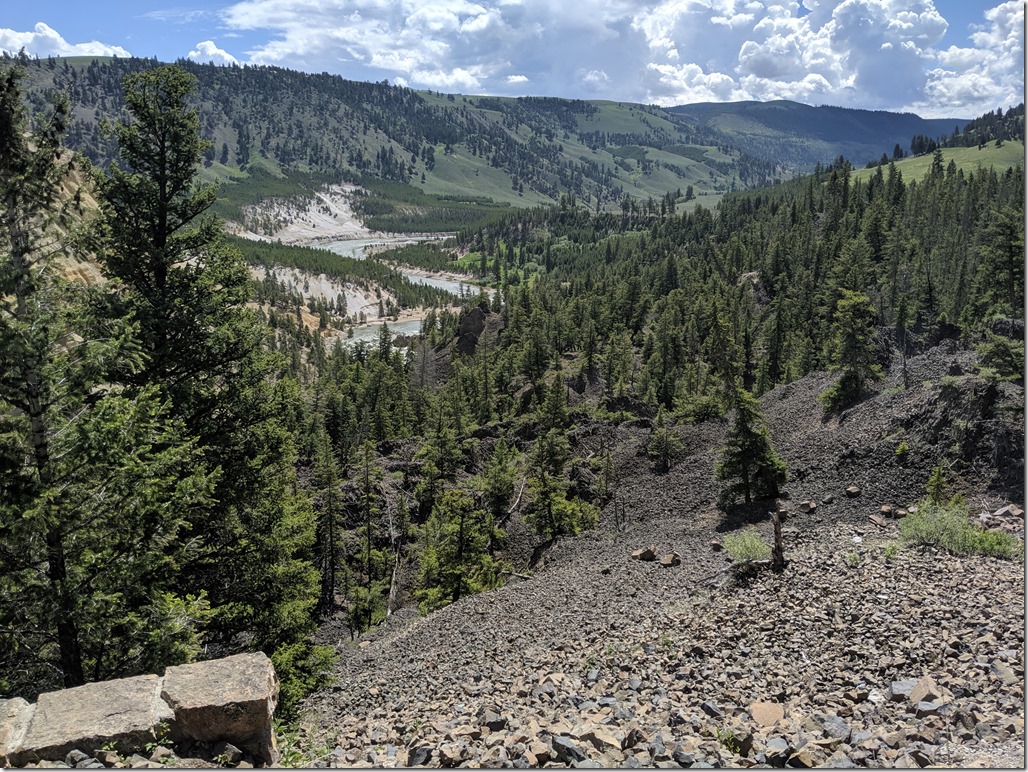
The descent was 21 km long, all the way down to Tower Junction, where the road branches west towards Gardiner and the North Entrance to the Park, and eastward towards Montana and the Northeast Entrance. But at the bottom of the hill is Roosevelt Lodge, where I stopped for lunch before heading up the Lamar Valley. The ride down got really hectic around the Devil’s Den, where the road drops along Antelope Creek and Tower Creek joins the Yellowstone River in an area called The Narrows. Between the cars, RVs, tourists crossing the road and lots of people and confusion, I rode through without getting any photos. However, I did stop just past The Narrows and took this photo of Yellowstone River.
[embedded widget removed: ./Messages from the Pale Blue Dot_ February 2020_files/embeds(6).html]

My first tour with Adventure Cycling Association in 2012 was around Death Valley, where I had the chance to meet Joe Loviska, one of our two tour leaders. We have stayed in touch over the years, touring together and bumping into one another from time to time. Joe has worked over the years at the coalface in the important intersection between the environment and education, training and teaching others about the natural environment. In recent years he and his friend, Katie, have called the Lamar Buffalo Ranch, part of the Yellowstone Forever Institute, their home. Nestled up in Lamar Valley in the northeastern (and most remote and least commercialized) quadrant of the Park, the Ranch is home to scientists, naturalists, botanists, and guests who come to learn about the ecosystem. Katie and Joe hosted me for two nights in one of the cabins on site, where I dried out my wet gear and hung with the bison wandering the campgrounds.
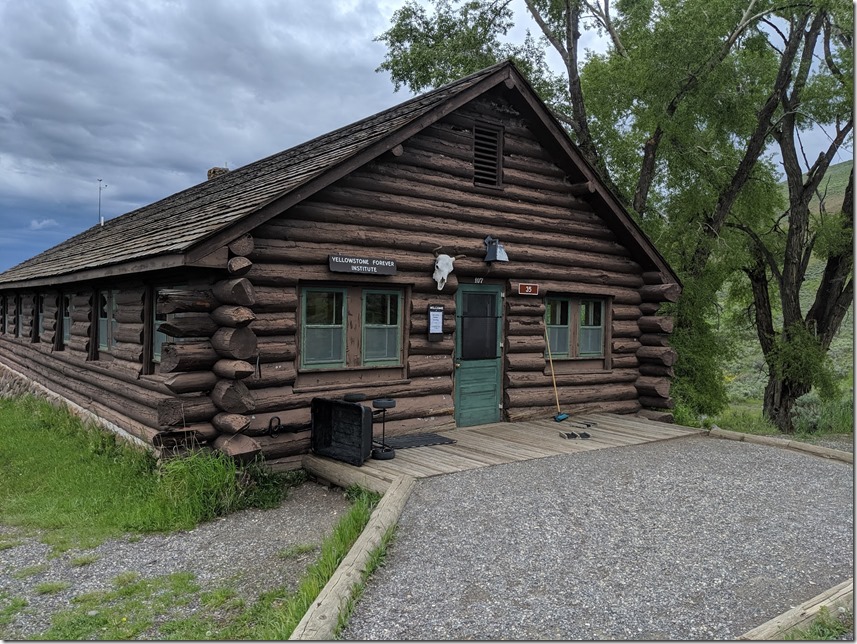
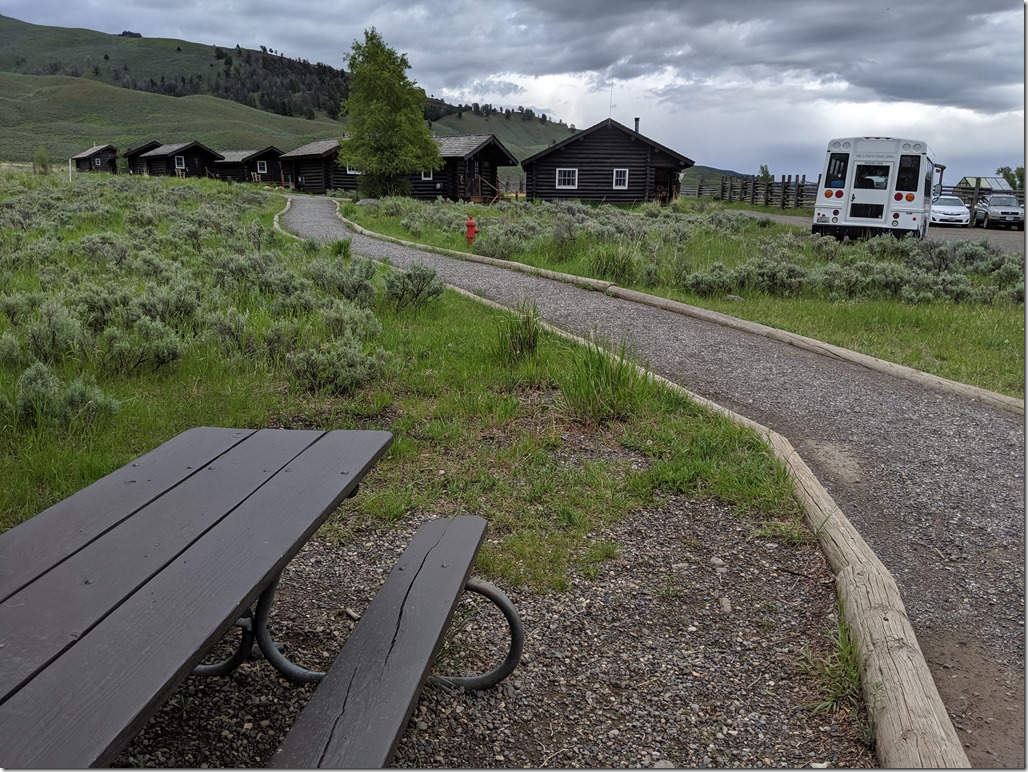
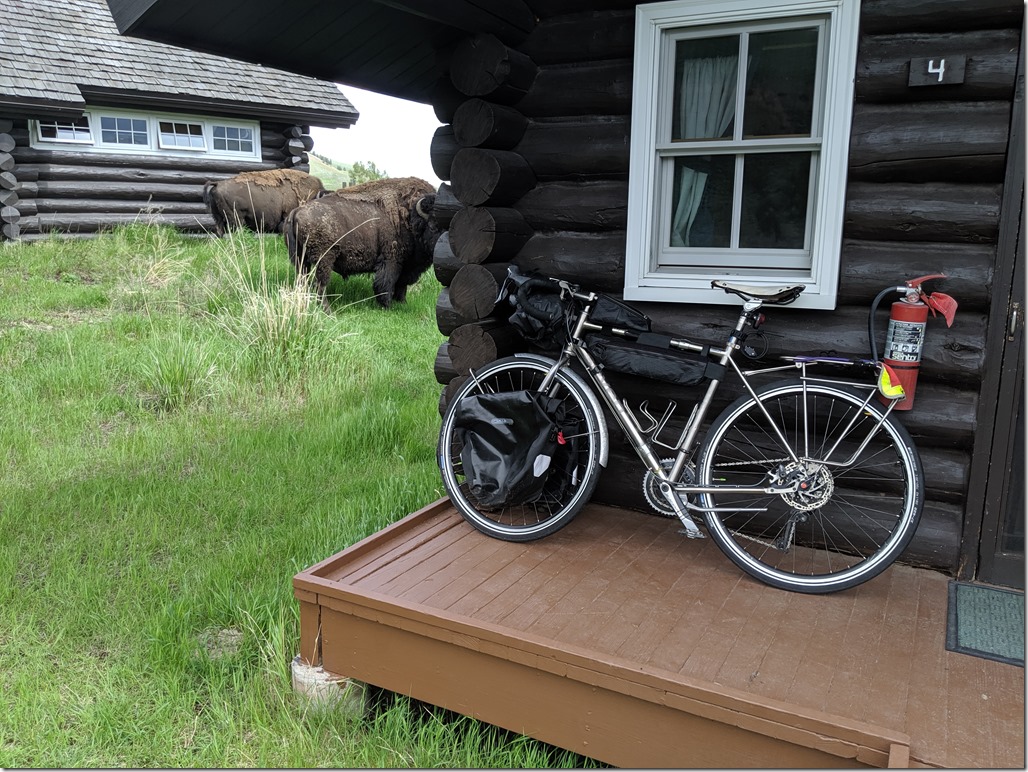
This was my cabin, with my bike on the porch and a friendly curious bison. All the guests at the Ranch were warned to walk cautiously around the grounds, checking before rounding a building or coming out of a doorway. One morning, coming out of the shower/bathroom, I peered out the door and saw a bison not two meters away, grazing on the verbena.
 Katie and Joe were wonderful hosts and we had a fantastic night out in Cooke City at the Miner’s Saloon. No big deal in the West to drive an hour to dinner outside of the Park. Distances are so stretched out in this part of the world.
[embedded widget removed: ./Messages from the Pale Blue Dot_ February 2020_files/embed.html]
Thanks Google Street View
With my gear all dried, clothes cleaned and chain lubed, I was ready to push on towards the Big Hole and Chief Joseph Pass. Joe was driving up to Missoula, with some backcountry camping along the way, and offered to drop me just outside of Yellowstone Park. My experience so far with the narrow roads and distracted drivers in big cars had not turned me into a fan of bicycle touring inside Yellowstone National Park. I gladly accepted the offer and motored over some of the roads I had ridden before. After three days of riding in Yellowstone, from the southern to almost the northeastern gates, I was not at all relishing navigating any more hectic Park roads with no shoulders.
Now that I know what I know, I think that I would recommend touring cyclists on the TransAmerica Trail Map sections 4 and 5 to avoid Yellowstone. Rather than riding the segment between Moran, Wyoming and near Earthquake Lake (at the intersection of Highway 87 and 287) west of Yellowstone National Park, I would suggest going over the Teton Pass Highway, using part of the TransAmerica Teton Spur. I think that this is the route that commercial operators use with tour groups, since they are not allowed to pass through Yellowstone National Park. Maybe an option would be to route around the park but through West Yellowstone, where you could arrange to leave your bike and take National Park public/tourist transportation into the Park. This would be very doable if you can live without your bike and don’t mind hauling your panniers/camping gear on buses from hiker/biker campground to hiker/biker campground.
Next section: Bike Camp in Twin Bridges and through the snow and hot baths across the Big Hole and down the Bitterroot to Missoula